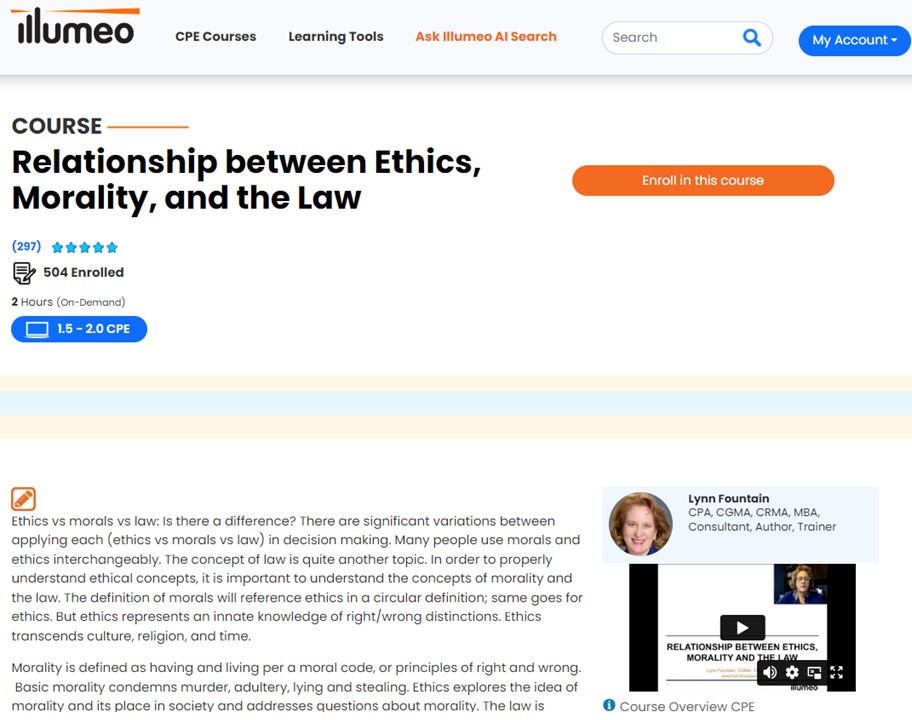
Ethics and morals are often used interchangeably but have distinct meanings, especially in professional contexts like accounting.
- Morals are personal principles that individuals hold regarding right and wrong. These principles are shaped by cultural, religious, and societal influences and reflect one’s personal beliefs and values.
- Ethics, on the other hand, are guidelines or rules set by external entities, such as professional bodies, organizations, or societies, to govern behavior. Ethics provide a framework for what is considered acceptable in a professional or social context.
For accountants, the distinction between ethics and morals is crucial:
- Ethics in Accounting: Accounting ethics are established by governing bodies such as the American Institute of Certified Public Accountants (AICPA), NASBA/State Boards of Accountancy and the International Ethics Standards Board for Accountants (IESBA). These rules require accountants to act with integrity, objectivity, and professional competence, ensuring public trust in financial reporting and auditing. Ethical guidelines help accountants avoid conflicts of interest, fraud, and other unethical practices.
- Morals for Accountants: While ethics are imposed by professional codes, an accountant’s personal morals influence their decisions in situations where ethical rules might be ambiguous. For instance, an accountant might choose to report a minor legal loophole even if the ethical code doesn’t explicitly require it, driven by their personal belief in fairness and transparency.This Ethics vs Morals Course was extremely helpful in understanding key differences between both and also provides CPA CPE Credits.
Ethics Vs. Morals debate In conclusion, while morals reflect personal beliefs, ethics are the professional standards accountants must adhere to, ensuring they act in the public interest and maintain the profession’s integrity. Both play a key role in guiding behavior and decision-making in the accounting profession.
 Business Blogs